Best Christmas Markets in Europe: 2026 Guide
Key Takeaways
Nuremberg is the benchmark: Germany's Christkindlesmarkt has run since 1628 and draws around 2 million visitors each year, with mulled wine starting at around €3.50 and traditional bratwurst at €3-4.
Colmar, France is genuinely magical: The Alsatian architecture and five separate themed markets make it one of the most photographed Christmas destinations in Europe, with vin chaud at roughly €3-4 a cup.
Vienna and Prague are best mid-week: Both cities see huge weekend crowds in December; arriving Tuesday to Thursday cuts queues and can save £50-100 on accommodation per night.
Budget varies significantly by country: Eastern European markets (Prague, Budapest) are notably cheaper than Western European ones, with hot drinks and snacks often 30-50% less expensive.
Book early for December travel: Flights from UK airports to Christmas market cities sell out fast; easyJet and Ryanair routes to Nuremberg, Strasbourg and Vienna typically fill up by October.
Spread the cost if you need to: If the trip feels like a stretch right now, Fair Financing through Vuelo (subject to eligibility) lets you book early and pay in monthly instalments rather than upfront.
Why Christmas Markets Are Worth the Trip
The best Christmas markets in Europe include Nuremberg for tradition, Colmar for storybook beauty, Vienna for grand scale, and Prague and Budapest if value matters most. For travelers planning a European Christmas market trip in 2026, whether you're after a budget-friendly weekend, a more cultural winter break, or an easy festive city trip with friends, these trips are especially appealing during the festive season and christmas season because they combine long-standing local traditions, strong atmosphere, and a short-break format that usually works in two or three nights. That mix is also a big part of why they stay so popular with travelers looking for real festive spirit rather than a generic winter city break.
The best ones in Europe date back hundreds of years. Nuremberg's has been running since 1628. Vienna's Christkindlmarkt on the Rathausplatz opened in 1975, but Vienna's Christmas market tradition has been celebrated since the 13th century. These aren't tourist gimmicks: they're living cultural events that happen to be spectacular to visit.
From a practical standpoint, December city breaks are often cheaper on accommodation than summer equivalents, though flights can spike sharply once November arrives. If you're comparing the best Christmas markets in Europe for atmosphere, cost, and ease of planning during the festive period, this guide covers the key cities, what each market does best, what to budget for, when to book, and where options like flexible financing make sense. Timing matters, so it's worth checking when to buy your flights to get the best price.
Nuremberg, Germany: The Original
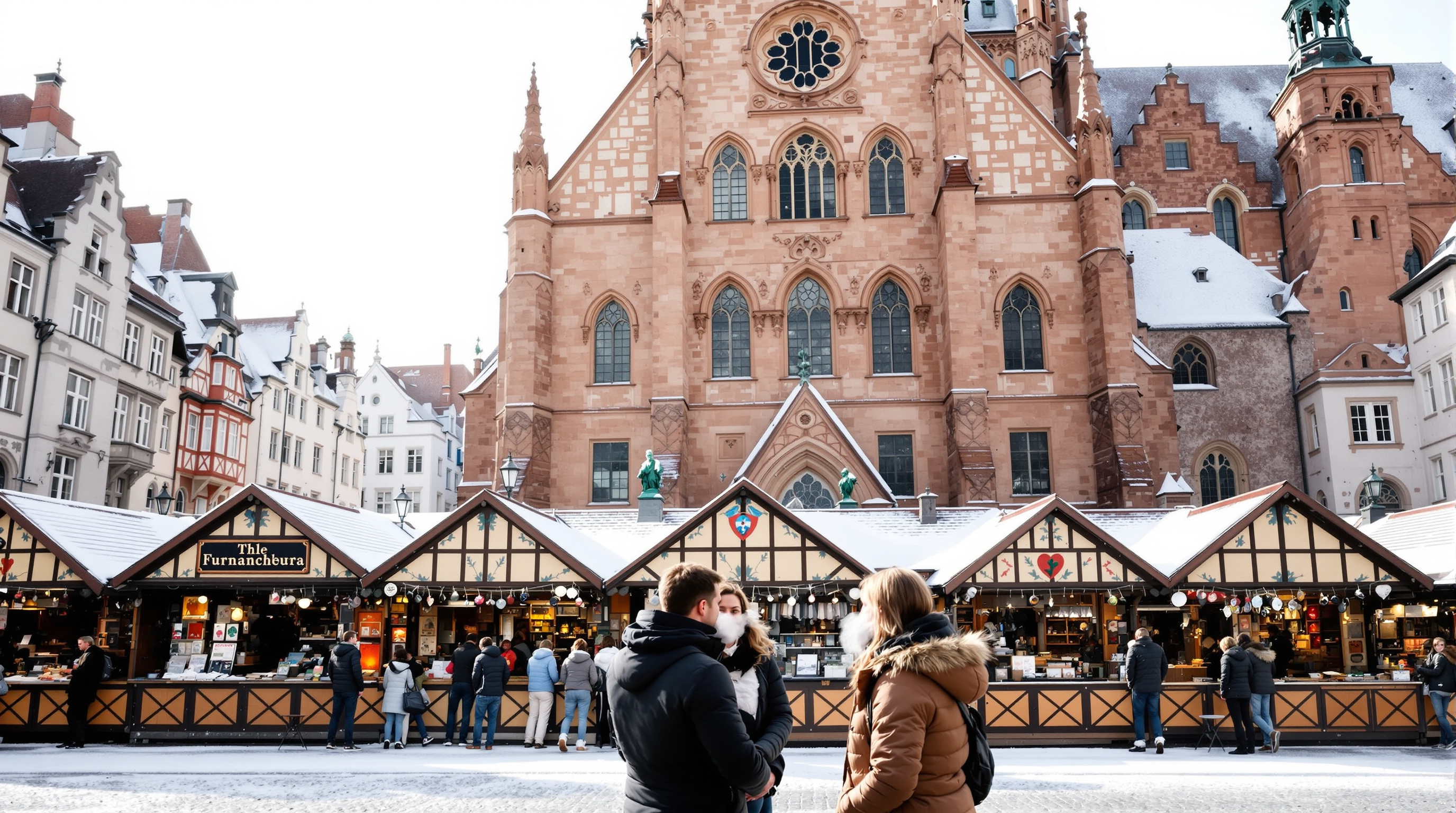
Nuremberg's Christkindlesmarkt is the most famous Christmas market in the world, and it earns that title. It takes over the city's medieval Hauptmarkt, the city's main market square, from late November through Christmas Eve, with around 180 stalls selling traditional Franconian crafts, gingerbread (Lebkuchen) and the city's legendary finger-sized grilled bratwurst alongside other delicious food. Around 2 million people visit each year, according to the city's tourism board.
I visited on a Wednesday evening in early December and it was busy but walkable. The festive atmosphere was genuinely warm: locals mixed with tourists, everyone clutching a terracotta mug of Gluhwein (mulled wine) that costs around €3.50 and comes with a €2 deposit on the mug, which you can keep as a souvenir or return for the cash.
What things cost in Nuremberg
Gluhwein: €3.50-4.50 per cup, plus mug deposit
Bratwurst in a bread roll: €3-4
Lebkuchen (gingerbread): €5-15 for a decorated tin
Return flights from London: From around £80-160 via Ryanair (Nuremberg) or easyJet, booked 2-3 months ahead
The market runs from 29 November to 24 December 2026. Entry is free.
Colmar, France: The Fairy-Tale One
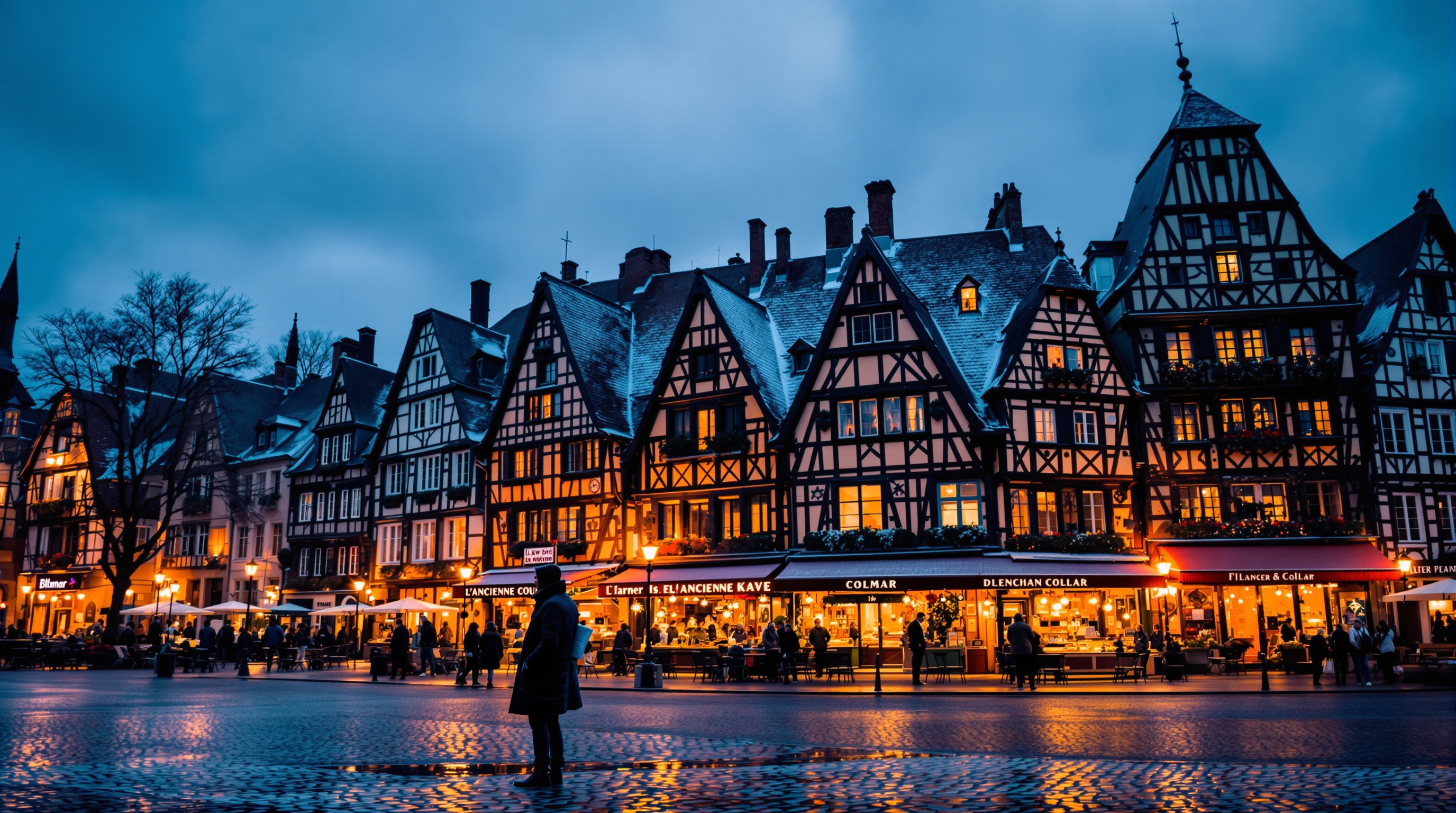
Colmar in Alsace is arguably the most beautiful Christmas market destination in Europe. The half-timbered medieval buildings draped in lights, the canal-side stalls, the smell of vin chaud drifting through cobbled streets: it looks almost too good to be real, and its fairy-tale look is one reason Colmar is often cited as the inspiration for Beauty and the Beast. It could easily pass for a christmas movie setting. But it is real, and it's worth every bit of the journey.
Unlike most cities that have one central market, Colmar runs five separate themed markets across different neighbourhoods from late November through late December. The most famous is Place de la Cathédrale, but the one at Place des Dominicains (under a Gothic church) is particularly special at night. Across the markets, one of the local food highlights is Flammekueche, a crispy pizza-like Alsatian dish.
What things cost in Colmar
Vin chaud (mulled wine): €3-4, served in ceramic cups
Tarte flambée (flatbread with cream and lardons): €7-10
Handmade wooden decorations: €5-40 depending on size
Getting there from the UK: Fly to Strasbourg (Ryanair from London Stansted, from around £50-120 one way), then it's a 30-minute train to Colmar
Colmar is small enough to cover on foot in a day, which makes it ideal as a long weekend paired with Strasbourg (just 75 minutes apart by train). If you're planning a girls' trip, our girls' weekend away guide has useful planning tips for exactly this kind of European city break.
Strasbourg, France: The Capital of Christmas
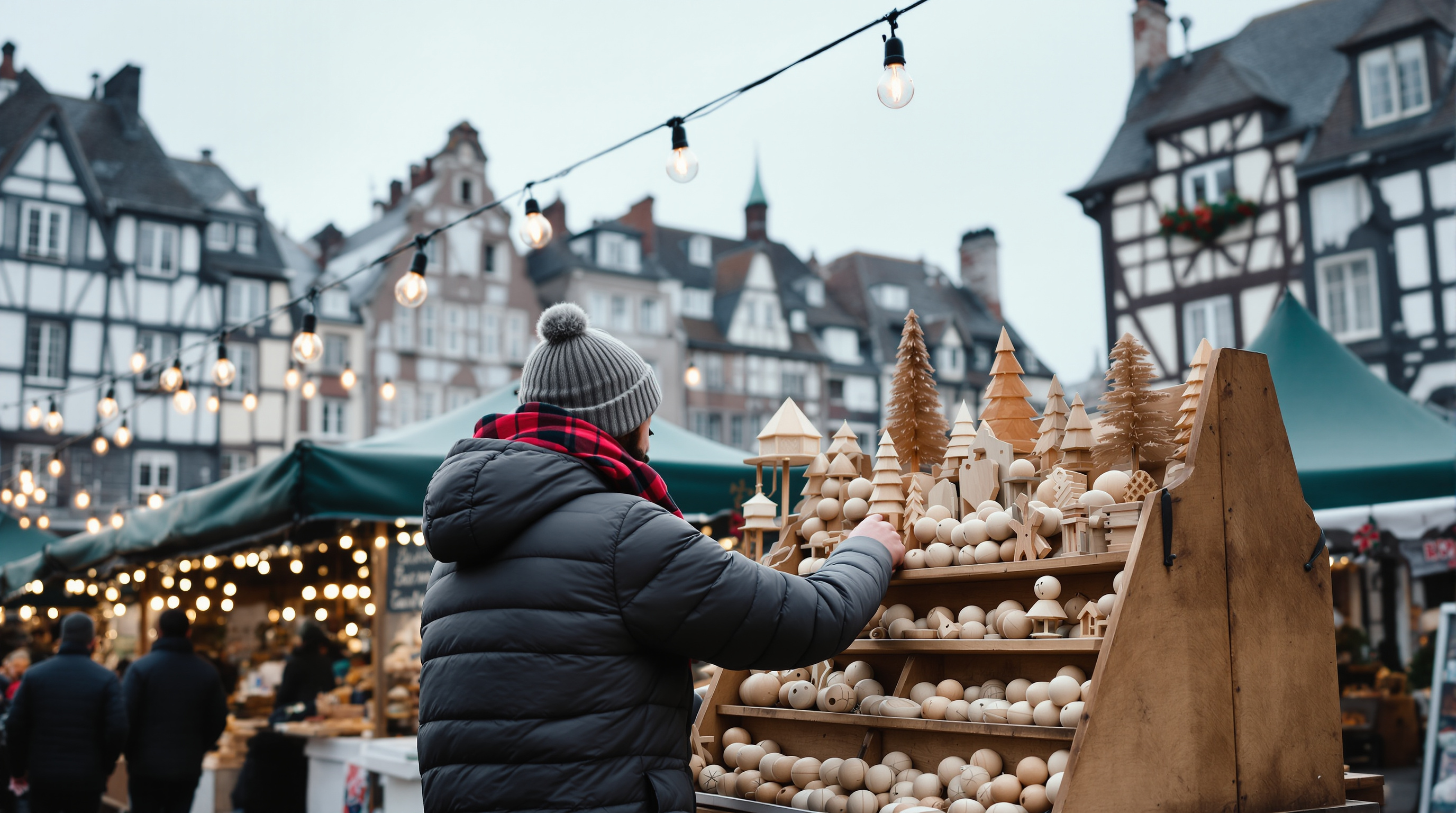
Strasbourg calls itself the Capital of Christmas, and while Dresden's Striezelmarkt, established in 1434, is one of Europe's oldest christmas markets, the Strasbourg Christmas Market dates back to 1570 and still makes the claim feel well earned. The city's 11 themed markets spread across the old town (Grande Ile), a UNESCO World Heritage Site, with over 300 stalls covering everything from artisan crafts to Alsatian specialities. strasbourg christmas markets are among the most atmospheric in Europe, and the Christkindelsmärik on Place Broglie is the oldest of the group.
The scale is what sets Strasbourg apart. You can spend two full days wandering between markets without repeating yourself, and the cathedral square at night, with the illuminated Gothic facade rising behind the stalls, is one of the genuine highlights of European Christmas travel.
Practical info
Dates: Late November to 24 December, with some markets running to 30 December
Getting there: Ryanair flies London Stansted to Strasbourg; alternatively Eurostar to Paris then TGV (around 1h50m)
Accommodation: Central hotels from £90-180 per night in December; book by September for the best rates
Strasbourg is worth a full day here, and pair it with a day trip to Colmar for the ultimate Alsace Christmas double.
Vienna, Austria: Grand-Scale Christmas
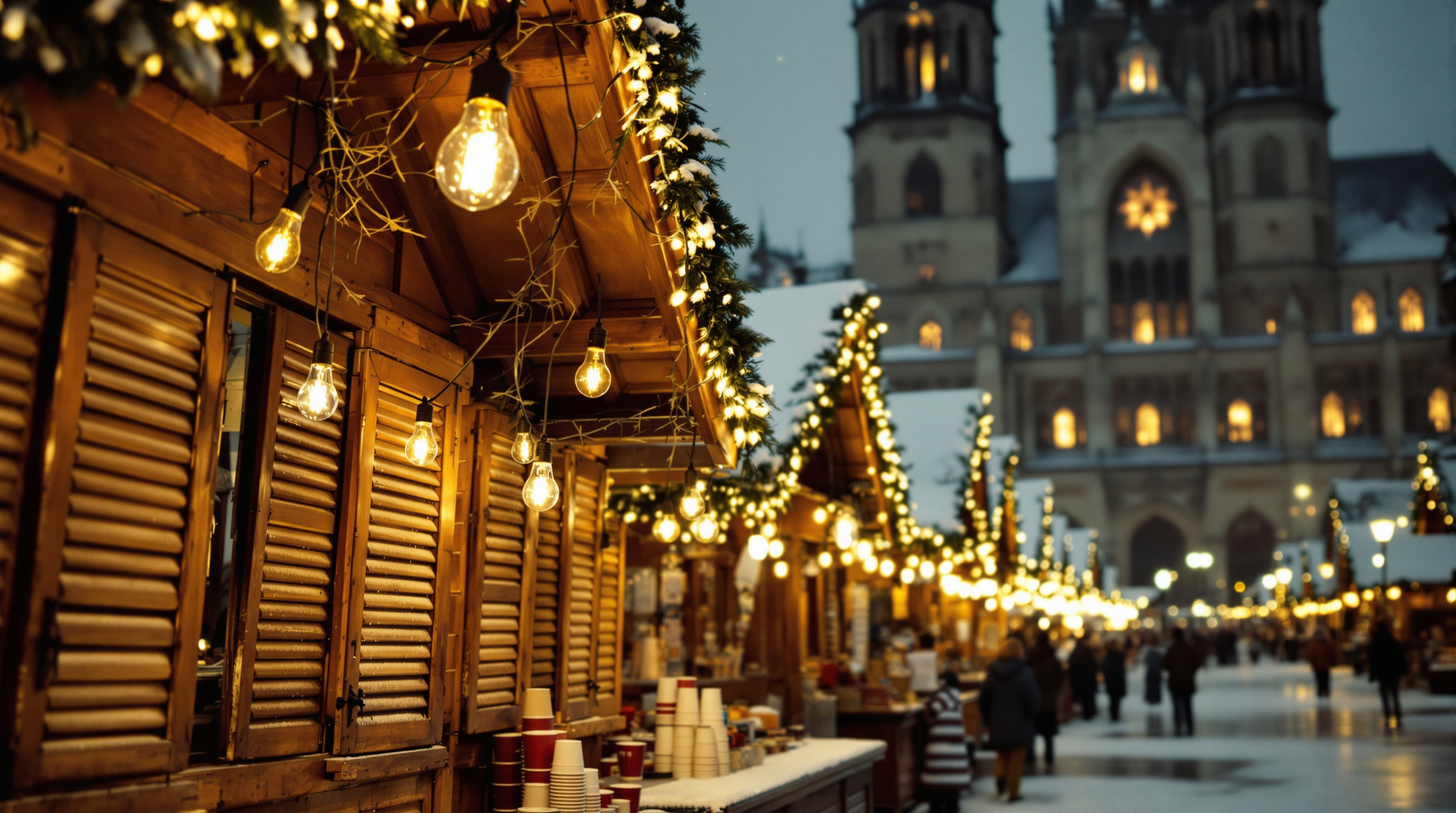
Vienna does Christmas on a grand scale. The Christkindlmarkt on Rathausplatz, set in front of the neo-Gothic City Hall, is the most iconic: around 150 stalls, an ice skating rink, ice skating as one of the big drawcards, a giant Christmas tree donated annually, and Rathausplatz glowing with festive lights like something from a film set at night, which helps explain why Vienna is often called the Christmas capital of Europe. But Vienna has around 20 separate markets scattered across the city, and some of the smaller ones are more rewarding.
The market at Schönbrunn Palace is set in the palace forecourt and feels more refined than the Rathausplatz crowds. Spittelberg, in the seventh district, is the one locals recommend: narrow Biedermeier streets lined with craft stalls, far fewer tour groups, and better food. Freyung is another worth seeking out, with the longer Schönbrunn run covering much of the festive season.
Prices are higher than Germany or France, reflecting Vienna's general cost of living. Expect to spend more on accommodation too: central hotels run £120-220 per night in December.
What things cost in Vienna
Punsch (Austrian mulled punch): €4.50-6 per cup
Kartoffelpuffer (potato pancakes): €5-7
Return flights from London: £70-180 with easyJet, Ryanair or BA, depending on how early you book
Vienna also works beautifully as part of a longer trip. Our guide to the best city break destinations in Europe covers how to combine it with Budapest or Prague by train.
Prague, Czech Republic: Best Value in Europe
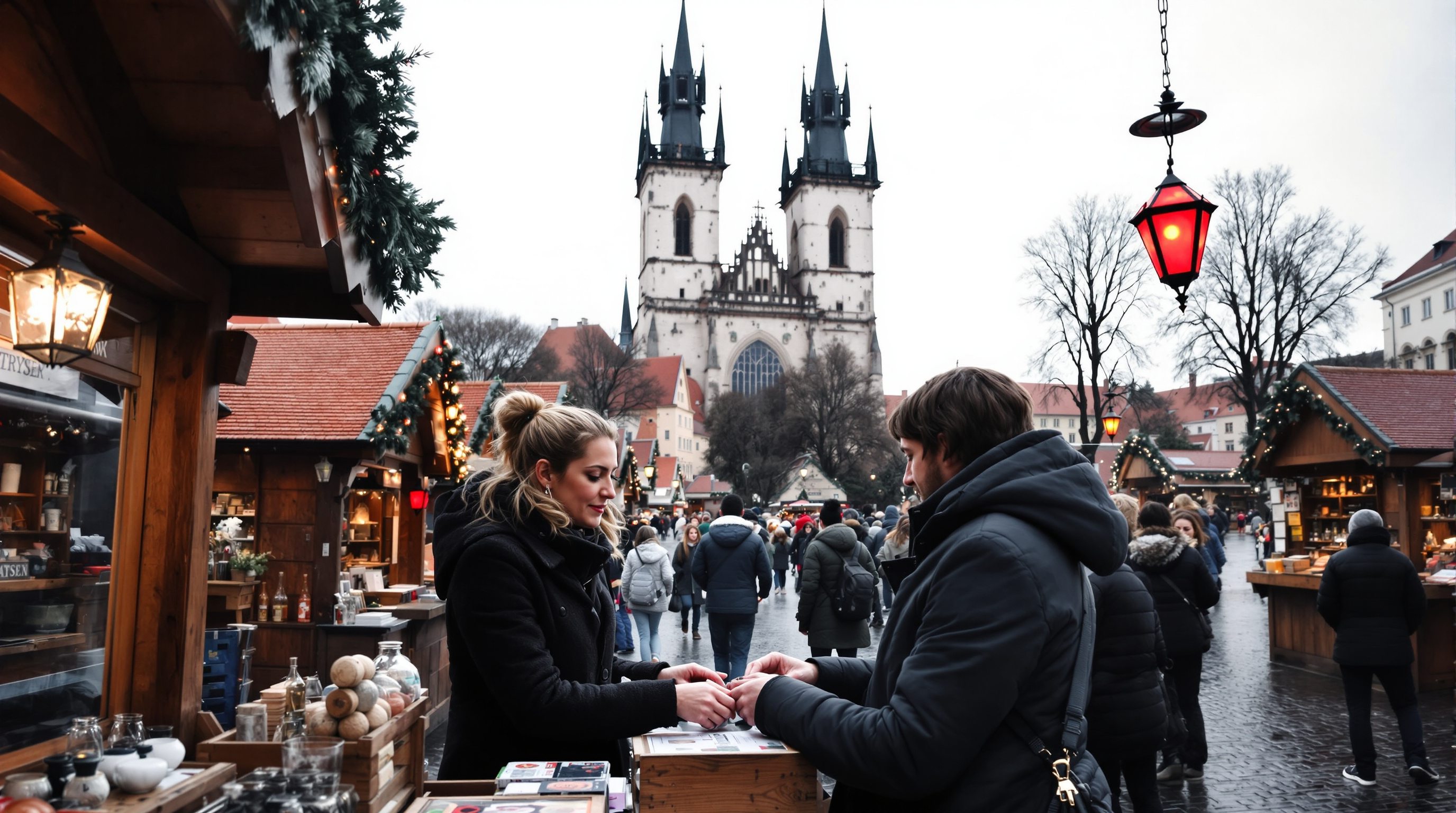
Prague is the best-value Christmas market destination on this list, and possibly in Europe. It's also one of Europe's most charming cities for a Christmas trip, especially if you want festive atmosphere without paying Vienna prices. The main markets at Old Town Square and Wenceslas Square are spectacular in their own right, with a stunning backdrop of Gothic and Baroque architecture that looks extraordinary once it's dark and lit up with twinkling lights. One of the most striking sights is the enormous Christmas tree in Old Town Square, brought in from the Czech countryside each year.
What makes Prague stand out is how far your money goes once you're there: drinks, food and souvenirs are all noticeably cheaper here than in Germany, France or Austria. That value is part of what makes Czech Republic Prague such a strong Christmas city break, since you can easily pair the markets with a walk to Prague Castle or across Charles Bridge.
What things cost in Prague
Svařák (Czech mulled wine): 60-90 CZK (around £2-3)
Trdelník (chimney cake): 80-150 CZK (around £3-5)
Klobása (grilled sausage): 100-150 CZK (around £3.50-5)
Return flights from London: £50-140 with Ryanair, easyJet or Wizz Air
The Old Town Square market is smaller but runs until 6 January 2026, covering the entire Advent and New Year period.
Cologne, Germany: Biggest Selection Anywhere
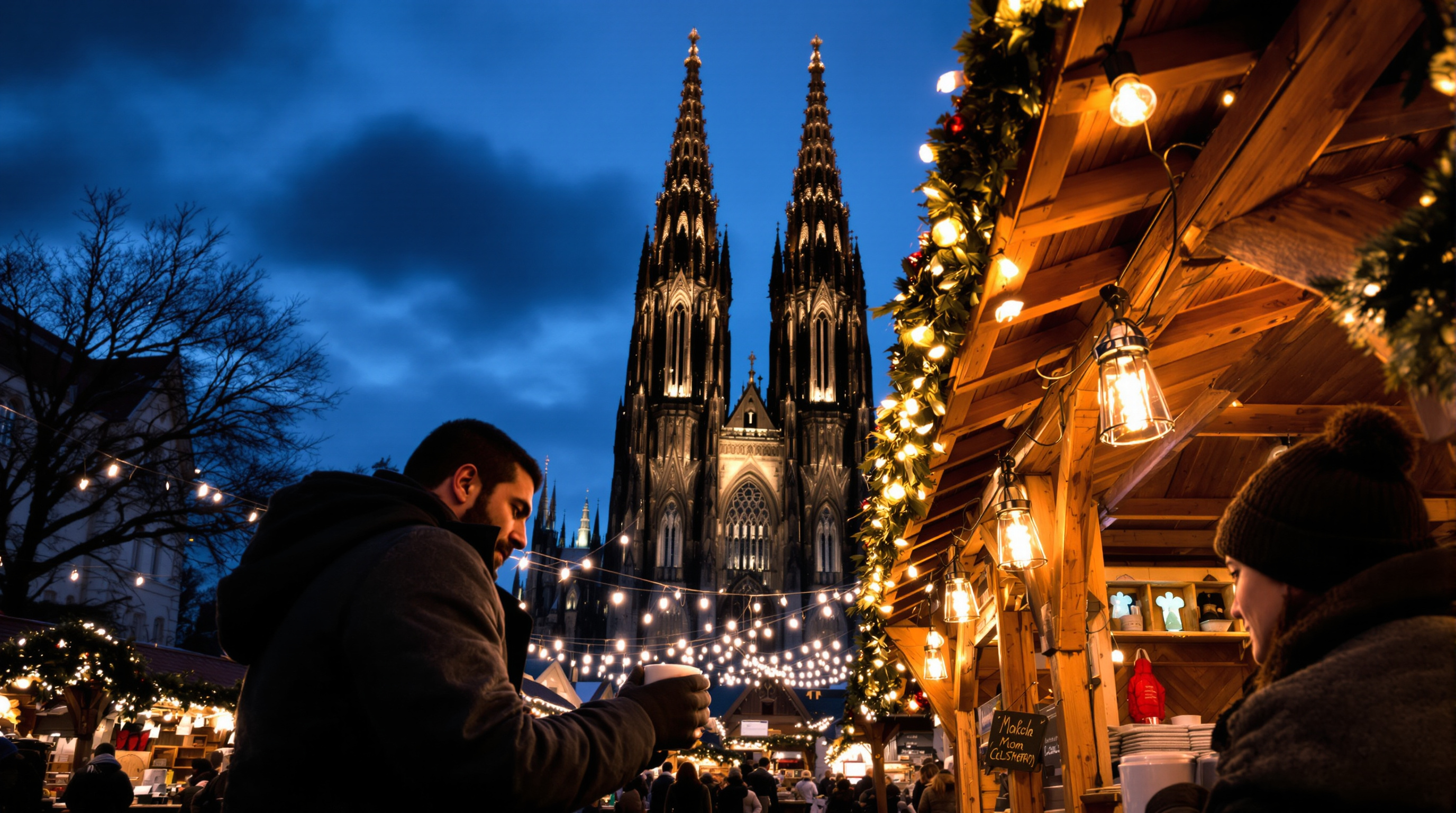
Cologne has several Christmas markets, spread across different parts of the city and each with its own distinct character. As one of the standout German Christmas markets, Cologne offers one of the biggest selections, though Berlin hosts over 100 Christmas markets each year. Cologne's Christmas markets began in the early 19th century. The most famous is the Cathedral Market (Weihnachtsmarkt am Kölner Dom), the city's most popular Christmas market among other markets, sitting directly beneath the twin spires of Cologne Cathedral.
The Angel's Market (Markt der Engel) on Neumarkt is the prettiest, with white-lit trees and costumed angels wandering between stalls. The Harbour Market (Hafen-Weihnachtsmarkt) has a maritime theme and sits right on the Rhine. There's also a Heinzel Christmas Market in the Old Town with a gnome theme that children particularly enjoy.
The big advantage of Cologne is that all the markets are within walking distance of each other, so you can cover four or five in a single day without needing transport.
What things cost in Cologne
Glühwein: €4-5 per cup plus deposit
Reibekuchen (potato fritters with apple sauce): €5-7
Return flights from London: £60-150 with Ryanair or easyJet to Cologne Bonn
Cologne is a strong choice for a first Christmas market trip because the density of markets means you get variety without needing to travel between cities. For more December destination ideas, see our guide to where is hot in December if you'd rather chase sun than snow.
Budapest, Hungary: The Hidden Gem
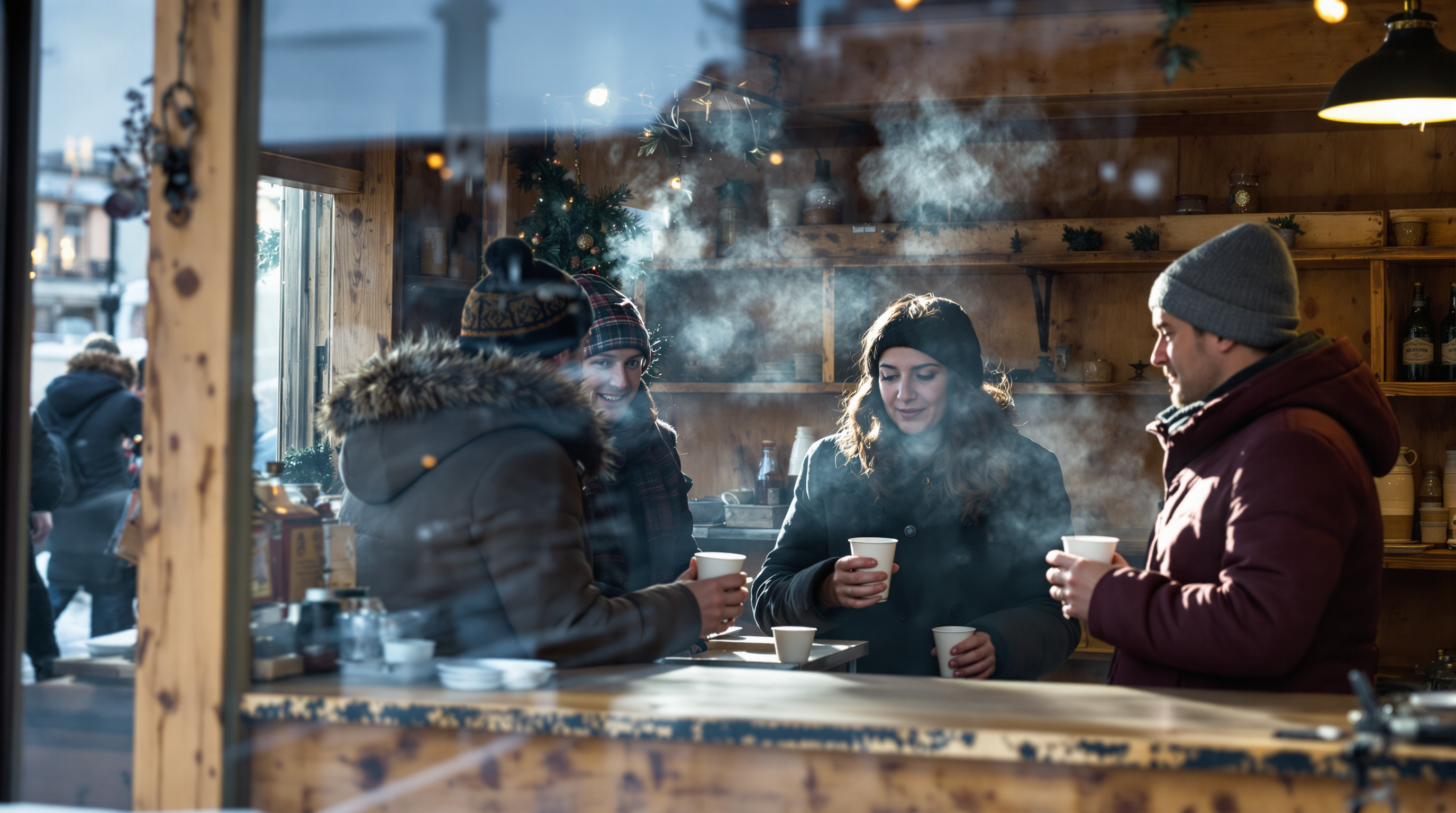
Budapest may not always lead every roundup of the top Christmas markets, which is exactly why it's worth including here. The market at Vörösmarty Square has been consistently rated among Europe's best for the past few years, and the city's thermal baths, ruin bars and river views add a layer of context that pure market destinations can't match.
Budapest's Christmas markets stand out for local folk music, which adds festive music and festive cheer to the atmosphere, plus genuinely good Hungarian food. The kürtőskalács (chimney cake) is a staple, but the real draw is the hot food: goulash, lángos (deep-fried flatbread with sour cream and cheese), and stuffed cabbage served from steaming pots.
The second major market at St Stephen's Basilica has a light show projected onto the basilica facade every half hour after dark, which is genuinely impressive and completely free to watch.
What things cost in Budapest
Forralt bor (mulled wine): 800-1,200 HUF (around £1.70-2.60)
Lángos: 1,500-2,500 HUF (around £3-5.50)
Return flights from London: £40-130 with Ryanair or Wizz Air
Budapest is the cheapest destination